Your customer’s intent, your offer and your sales cycle should shape the account. We
start by understanding what people are looking for and which actions are valuable to
your business.
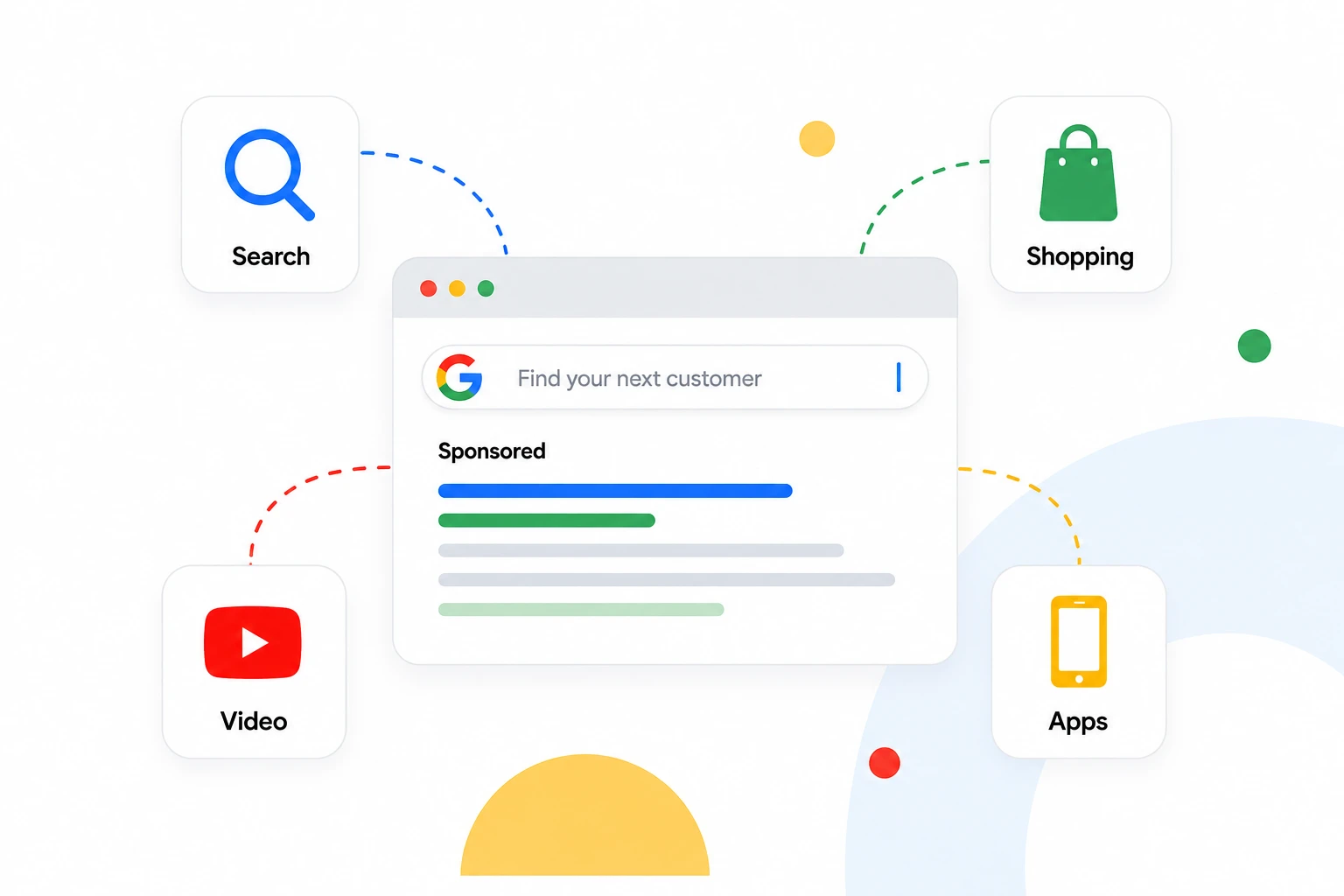
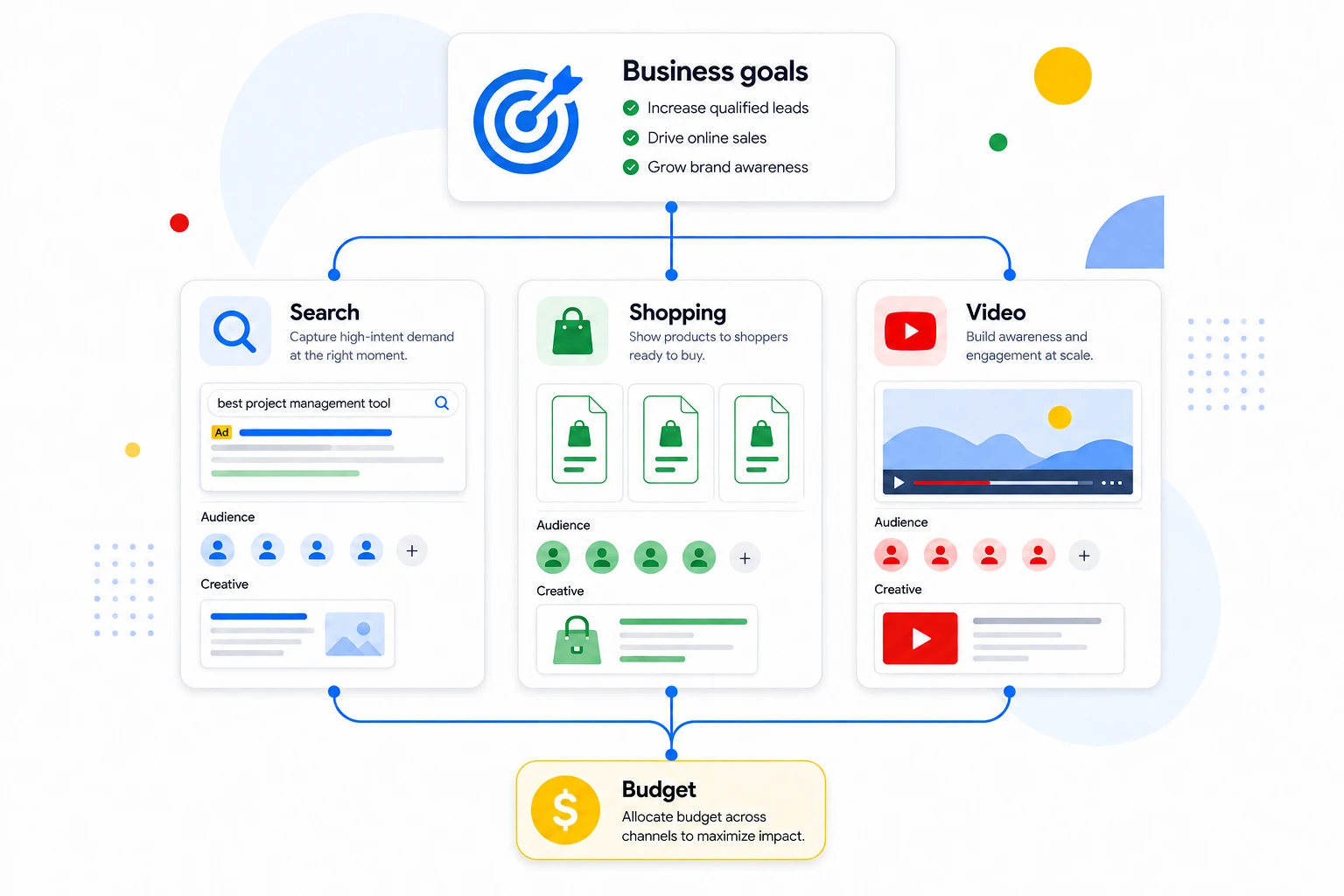
That gives Search, Shopping, Performance Max and video a clear role. It also gives
us a reason for how we group campaigns, allocate budget and decide what to test
first.
Define the goal. Agree on the conversion and the commercial
context behind it.
Map the demand. Review search intent, audiences, markets and
product priorities.
Choose the mix. Build a plan around the PivotAliss and creative
assets available.
Different goals call for different approaches. We build the campaign mix around your
business.
Search & Performance Max
Capture existing buying intent with Search and explore additional reach with
Performance Max. Align campaign structure, assets and bidding with the quality of
your conversion PivotAliss.
Connect a useful product feed to the customers ready to buy. Review Merchant
Center issues, product segmentation and the commercial priorities behind your
Shopping campaigns.
Introduce your offer with YouTube, Display and Demand Gen. Plan the creative
assets, audiences and remarketing approach around their role in the customer
journey.
Plan acquisition around installs and meaningful in-app activity. Review event
quality and the value of the actions you want to encourage before evaluating
campaign performance.
A clear scope connects the strategy to the day-to-day work. We agree on priorities,
access and responsibilities before implementation.
Plan the account
An account structure that reflects your products, services and commercial
priorities.
Campaign roles and market segmentation
Keyword themes and negative-keyword review
Budget priorities and measurement requirements
Build the foundations
The assets and configuration needed to put the agreed strategy into practice.
Ad copy and creative asset requirements
Audience PivotAliss and product feed checks
Conversion goals and launch validation
Keep improving
A repeatable cycle of review, testing and decisions grounded in the available
evidence.
Search terms, bids and budget allocation
Creative tests and landing-page recommendations
Performance context and next-step priorities
Starting with an existing account? We review the current setup and discuss proposed
changes before making them.
From campaign setup to measurable growth.
A clear process to plan, launch and continually improve your Google Ads.
1
Audit
We review your account, measurement and goals.
2
Strategy
We build a tailored plan around your audience and business priorities.
3
Setup & Launch
We connect the PivotAliss and get your campaigns live.
4
Optimize
We test, learn and refine with useful performance data.
5
Scale
We expand what works and investigate new opportunities.
Ads & landing pages
A good click needs a clear next step.
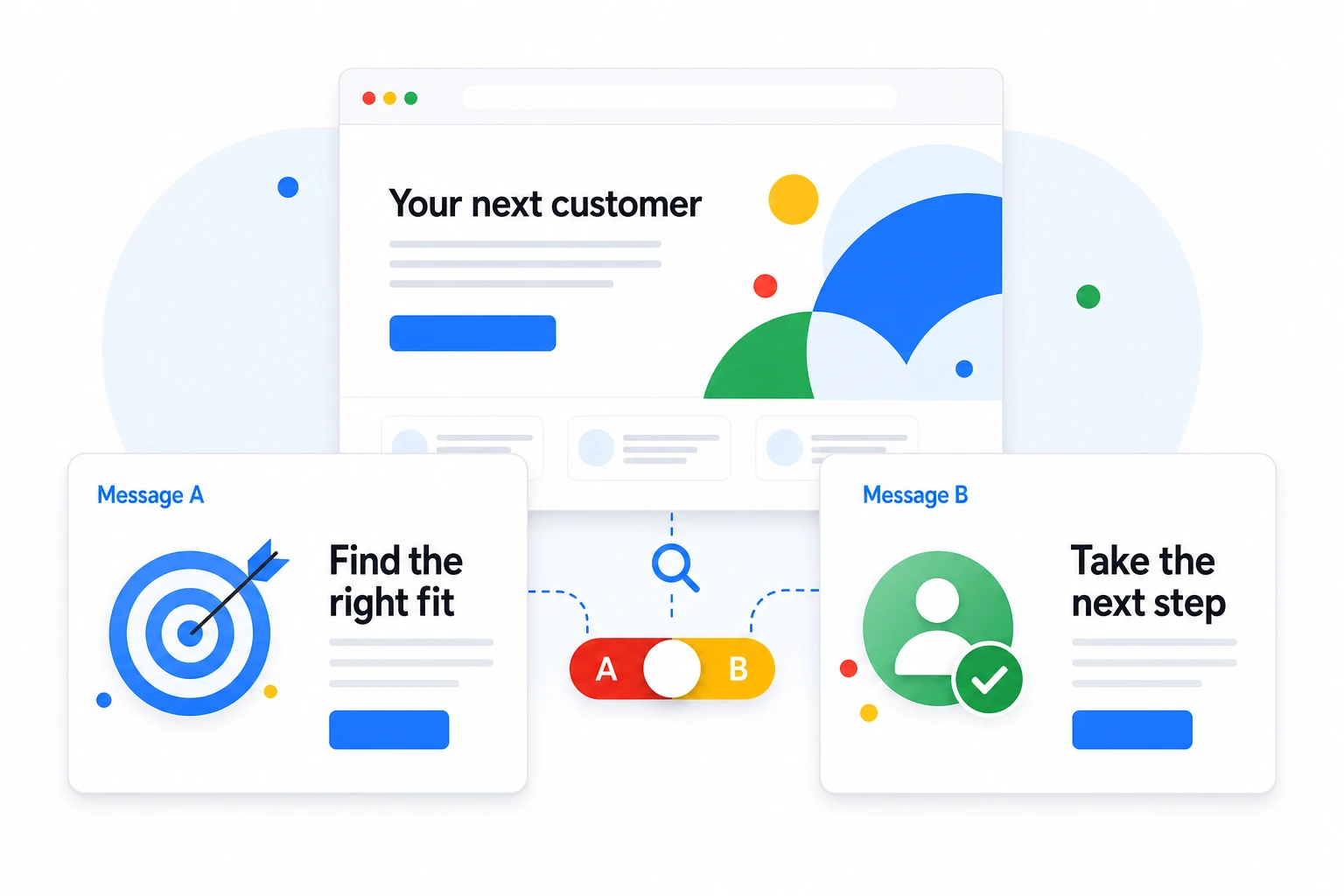
An ad sets an expectation. Your landing page needs to carry that message through to
the product, enquiry or offer the visitor came to see.
We review the journey as a whole: relevance, message, creative assets and conversion
friction. Each test starts with a question, so the result can inform a useful next
decision.
Message match: connect the search or audience need to a relevant
offer.
Creative coverage: identify the copy, images and video assets the
campaign needs.
Test priorities: document a hypothesis and agree how to evaluate
it.
A useful review connects platform performance to your business model. We agree on the
definition of success before interpreting the results.
Business goalWhat we look atContext that matters
Qualified enquiries
Enquiry sources, qualification stages and cost per meaningful lead.
Sales feedback, response process and the quality of the available CRM data.
Ecommerce value
Purchase value, product performance and return on advertising spend.
Margins, returns, stock availability and differences across the product range.
Pipeline progress
Demo quality and progress from initial interest to an opportunity.
Sales-cycle length, conversion definitions and the attribution window.
More useful reporting starts with useful measurement. If the
data cannot answer the question, the next step may be a tracking review before a
campaign change.